Garment and fiber
Fabric content, dye, texture, weight, and heat sensitivity affect ink choice, opacity, cure strategy, and whether dye migration needs to be controlled.
Custom screen printing in Chicago
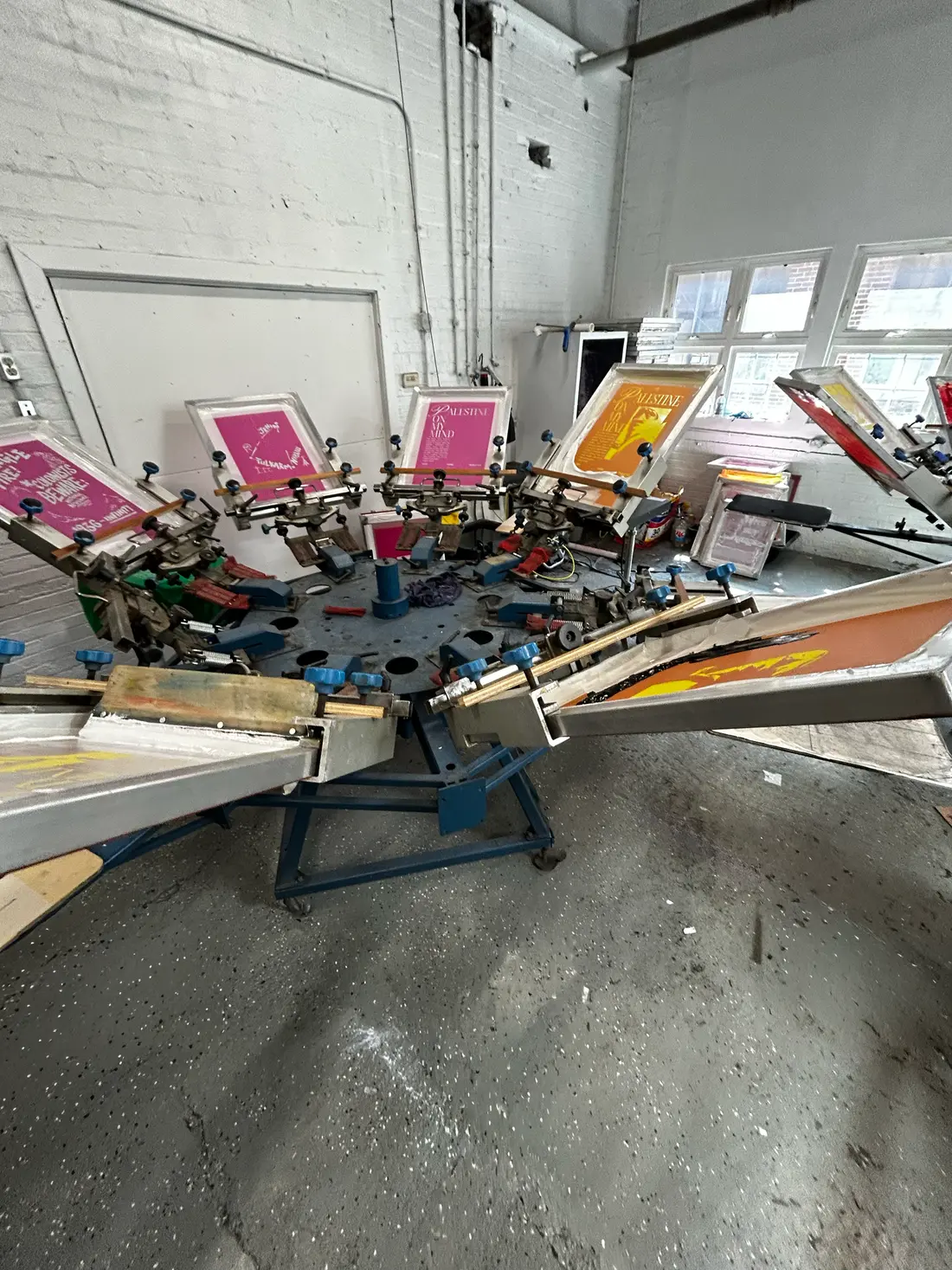
Screen printing is more than pushing ink through mesh. The artwork, garment, color separation, screen, ink deposit, flash sequence, and final cure all have to work as one system. We make those decisions before the run starts.
 CAOS CREATES / CHICAGO
Plan your order
Garment choice, quantity per design, ink colors, print locations, artwork preparation, and specialty finishes affect the quote. Repeating an approved design across more pieces can spread setup costs; different designs or placements may need separate setups.
We review the artwork, selected garment, placements, and deadline together. Confirm the agreed decoration, garment availability, and delivery schedule with CAOS Creates before making commitments for your event or launch.
Serving Chicago businesses, brands, artists, schools, teams, and organizations, with nationwide shipping.
Still choosing? We can review the options with you.
Find Your Perfect BlankMore than ink on a shirt
Great screen printing begins with honest artwork preparation. We preflight the file, size it for the garment, separate every printable color, and decide whether the design needs an underbase, halftones, trapping, or a different production method altogether. That planning is what protects fine detail and keeps color consistent across a full run.
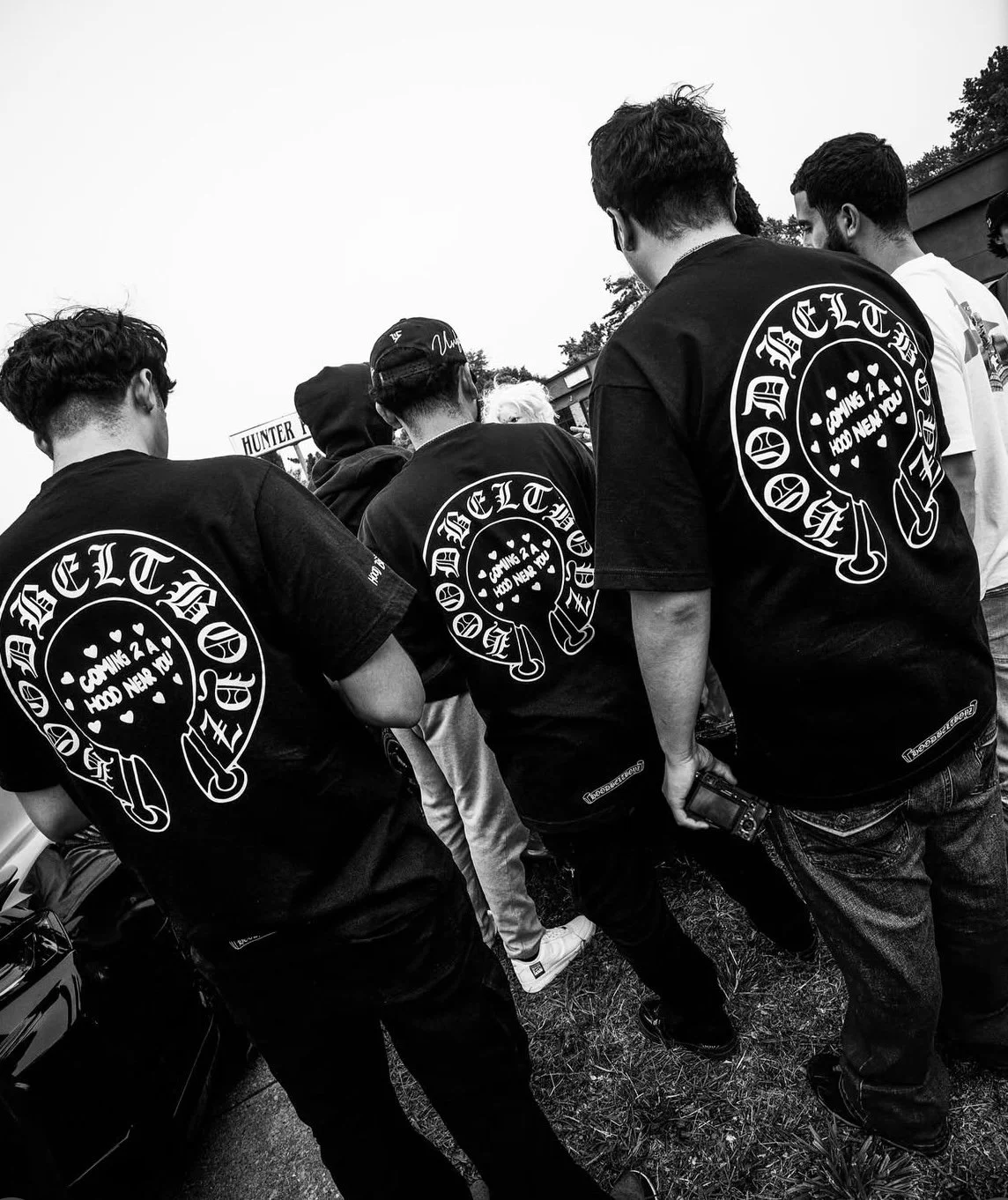
The blank matters just as much as the graphic. Cotton, blends, fleece, garment-dyed goods, and performance fabrics can react differently to heat and ink. We match the garment, ink system, and print sequence to the look and hand feel the project needs—not just the fastest route to the press.
 ACTUAL CAOS WORK
From our shop
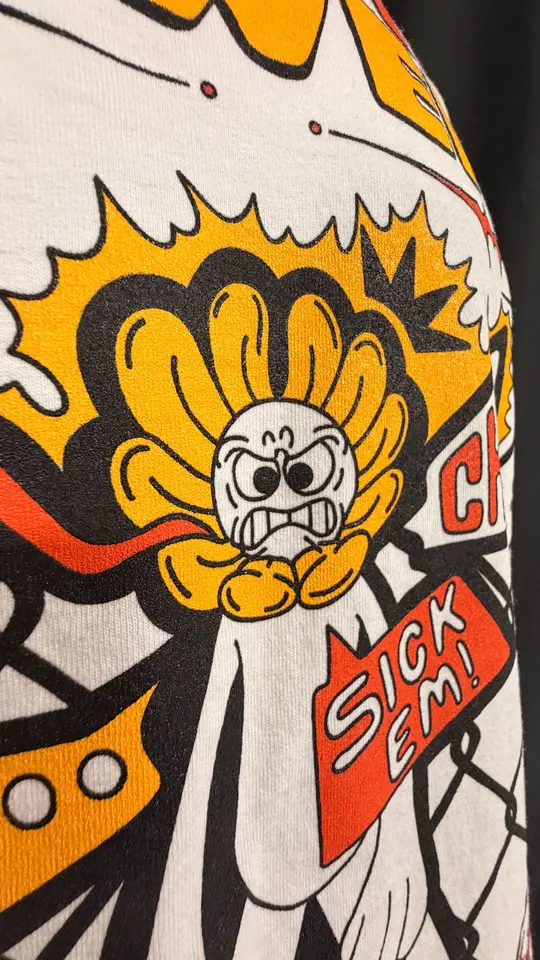
Fine lines, multiple colors, and garment texture all change how a print needs to be approached. We review those relationships before production begins.
View the production piece Make Something Like ThisInside the work
We inspect resolution, line weight, transparency, print size, color count, and placement. Weak details are corrected before they become weak stencils.
Every spot color becomes its own printable layer. Complex artwork may use halftones to create tonal range while keeping the screen count controlled.
Mesh count, stencil, off-contact, squeegee, and ink deposit are selected around the artwork and garment. The press is registered so each layer lands where it belongs.
A test print confirms registration, opacity, color, placement, and hand feel. Adjustments happen before the production run—not halfway through it.
Colors are printed in sequence, flashed only as needed, and cured through the ink film so the design bonds correctly instead of merely feeling dry on the surface.
We check placement, coverage, registration, contamination, and curing consistency before pieces move to packing, pickup, shipping, or fulfillment.
Expert production choices
There is no universal setup that works for every shirt. These are the choices that determine how the final piece looks, feels, and wears.
Fabric content, dye, texture, weight, and heat sensitivity affect ink choice, opacity, cure strategy, and whether dye migration needs to be controlled.
Plastisol is strong for opacity, crisp spot color, and specialty effects. Water-based or discharge-style approaches can create a softer hand, but garment compatibility must be tested.
Fine detail needs a different mesh and deposit than bold lettering, athletic numbers, puff ink, or a high-opacity base. The screen must serve the art.
Dark garments often need a controlled base layer so top colors stay bright. Too much base or heat creates a heavy print; too little leaves the design dull.
A file that looks balanced on a screen can feel wrong on a small tee, oversized hoodie, pocket, or sleeve. We size for the actual garment range.
Puff, metallic, glow, and other effects change the stencil, deposit, print sequence, and cure requirements. They are engineered into the setup from the start.
Artwork guide
The cleaner the source file, the more control we have over edges, color, detail, and final size. If the file is not production-ready, we can help rebuild it.
Where it shines
Before production
Every design, garment, and deadline changes the best production route. We'll review the details before we quote.
Traditional spot-color screen printing normally requires a separate separation, screen, registration step, and print pass for each color. Garment color, underbases, specialty inks, and print locations also affect setup and run time.
Most bright prints on dark garments need a base layer to block the fabric color and support opacity. The exact setup depends on the ink, shirt dye, artwork, and desired hand feel.
Yes. A Pantone Solid Coated reference gives the clearest target for spot-color mixing. Fabric color, ink deposit, and underbase can influence the final appearance, so critical matches should be discussed before production.
DTF is often a better fit for small quantities, many colors, photographic detail, or designs that would require too many screens. Screen printing usually wins when consistency, specialty ink, or larger-run economics matter most.
Turn garments inside out, wash cool with mild detergent, avoid bleach, and tumble dry low or air dry. Do not iron directly over the decoration.
Turnaround depends on garment availability, artwork approval, quantity, print locations, specialty ink, finishing, and delivery. The production schedule is confirmed after the complete project is reviewed.
Send your actual quantity per design, even if it is only an estimate. CAOS Creates reviews the artwork and garment before recommending a method. Minimums, availability, and pricing are confirmed for the specific job.
Built for your project
Send the artwork, quantity, garment type, print locations, and deadline. We'll recommend the production plan.
Start your project DESIGN / MAKE / DELIVER