Stitch type
Run stitches handle fine paths, satin stitches build clean columns and lettering, and fill stitches cover larger shapes. The artwork decides the mix.
Custom embroidery in Chicago
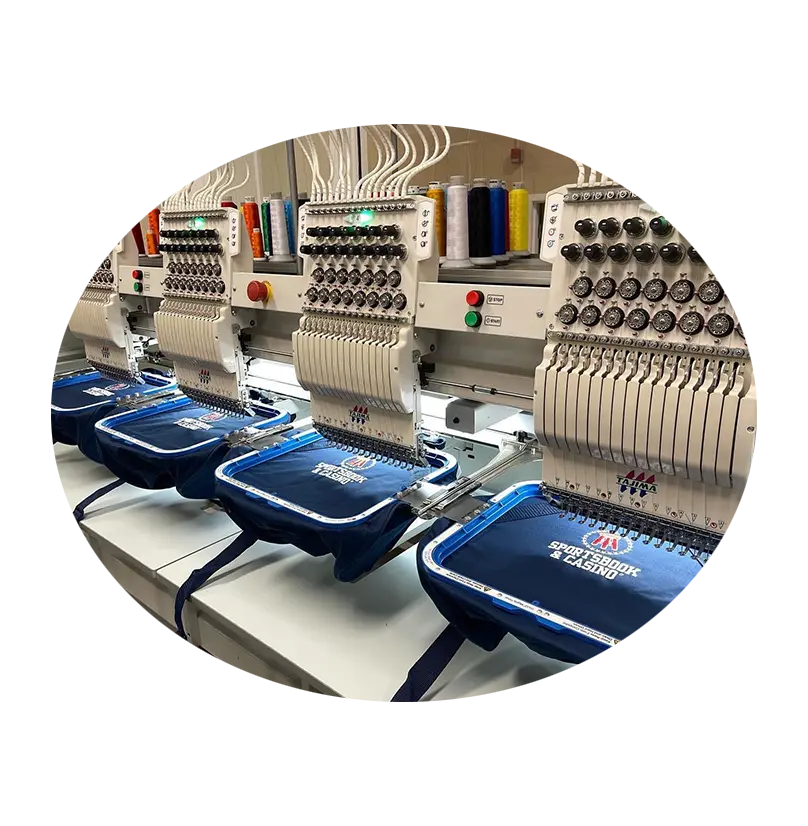
Embroidery is not a printed logo traced by a needle. Every shape has to be translated into stitch types, direction, density, sequence, pull compensation, and support that make sense for the exact garment.
 CAOS CREATES / CHICAGO
Plan your order
Garment choice, design size and stitch count, digitizing, quantity, locations, and personalization affect embroidery pricing. A large filled logo can take more stitching time than a compact mark; send the artwork so we can review the actual job.
We review the artwork, selected garment, placements, and deadline together. Confirm the agreed decoration, garment availability, and delivery schedule with CAOS Creates before making commitments for your event or launch.
Serving Chicago businesses, brands, artists, schools, teams, and organizations, with nationwide shipping.
Still choosing? We can review the options with you.
Find Your Perfect BlankHeadwear for your crew
Outfitting staff, field teams or volunteers? Start with the people wearing the pieces, then send us your preferred mix of cuffed beanies, slouch beanies and baseball caps.
List each style, color and quantity. Include your original logo, preferred front placement and any thread-color direction. Still choosing the garments? Tell us how the team will use them.
We’ll review the available embroidery area and logo size for each garment. If a detail needs a different size or treatment, we’ll explain the options and get your approval before changing the artwork.
Include the date you need the finished pieces and whether you prefer Chicago pickup or shipping. We’ll review availability and production timing before confirming the schedule.
Plan embroidered headwearThread has its own rules
A strong embroidery file tells the machine far more than where the logo sits. It controls the path of each section, the order of colors, the angle of the stitches, underlay, density, tie-ins, and how the design compensates for fabric movement. Poor digitizing can turn clean artwork into gaps, puckering, buried details, or uneven edges.
We plan the stitch file around your original artwork and selected garment. If a detail may not reproduce clearly, we’ll explain the options and ask you to approve any proposed artwork changes before production.
Inside the work
We review size, letter height, line weight, negative space, color blocks, and intended placement. Details that will close up or disappear are addressed first.
The design is rebuilt as stitch instructions using suitable run, satin, and fill stitches, with the sequence and direction planned to control movement and preserve shape.
Stabilizer, hoop tension, orientation, and placement are selected for the fabric and garment construction. Support must hold the design without distorting the piece.
A physical test reveals what a screen preview cannot: pull, push, registration, thread coverage, small-text clarity, edge quality, and how the garment reacts.
After the file is tuned, garments are loaded consistently and stitched with the approved thread, placement, backing, and machine settings.
Excess backing and jump threads are cleaned, then each piece is checked for placement, tension, missing stitches, puckering, and finish quality.
Expert production choices
Thread adds dimension, weight, and movement. Expert embroidery balances all three so the logo looks deliberate instead of simply dense.
Run stitches handle fine paths, satin stitches build clean columns and lettering, and fill stitches cover larger shapes. The artwork decides the mix.
Stitch angles create light, texture, and edge definition. A controlled sequence reduces registration problems and avoids trapping areas in the wrong order.
More thread is not automatically better. Density and underlay must support coverage without making the design stiff, heavy, or likely to pucker.
Stable twill, stretchy performance fabric, fleece, knit caps, and jackets all move differently. Backing and hooping are chosen around that behavior.
Crown height, seam position, panel structure, and cap profile control the available embroidery area and how the design must sew from the center outward.
Puff needs bold, closed shapes with enough width to cover the foam. Tiny details, open ends, and thin lettering belong in flat embroidery instead.
Artwork guide
Vector art gives us the cleanest foundation, but every design still needs digitizing. These guidelines help preserve legibility before the first sew-out.
Where it shines
Before production
Every design, garment, and deadline changes the best production route. We'll review the details before we quote.
Digitizing converts artwork into machine instructions that control stitch type, direction, density, sequence, underlay, and compensation. It is a production craft, not an automatic file conversion.
Small lettering can lose clarity at the intended embroidery size. We’ll review your logo on the selected garment, explain any concerns and discuss options with you. Any proposed changes to your artwork require your approval before production.
The main factors are garment, quantity, placement, design size, stitch count, digitizing complexity, number of locations, and whether the job uses flat embroidery or 3D puff.
No. Puff works best with bold shapes and lettering wide enough to cover the foam. Fine details, narrow columns, distressed edges, and open-ended shapes usually stitch better flat.
Standard embroidery uses solid thread colors and does not reproduce smooth gradients or photographic detail like print. Artwork usually needs to be simplified into clear shapes, controlled shading, or a limited thread palette.
You approve the placement and digitized direction before the full run. For demanding artwork, a physical sew-out is the most reliable way to judge thread coverage and small-detail performance.
Send the file and previous project reference if available. A stitch file suited to one size, fabric, or cap construction may need adjustment for another garment. CAOS Creates reviews compatibility and preparation requirements before production.
Built for your project
Send the artwork, quantity, garment type, print locations, and deadline. We'll recommend the production plan.
Start your project DESIGN / MAKE / DELIVER