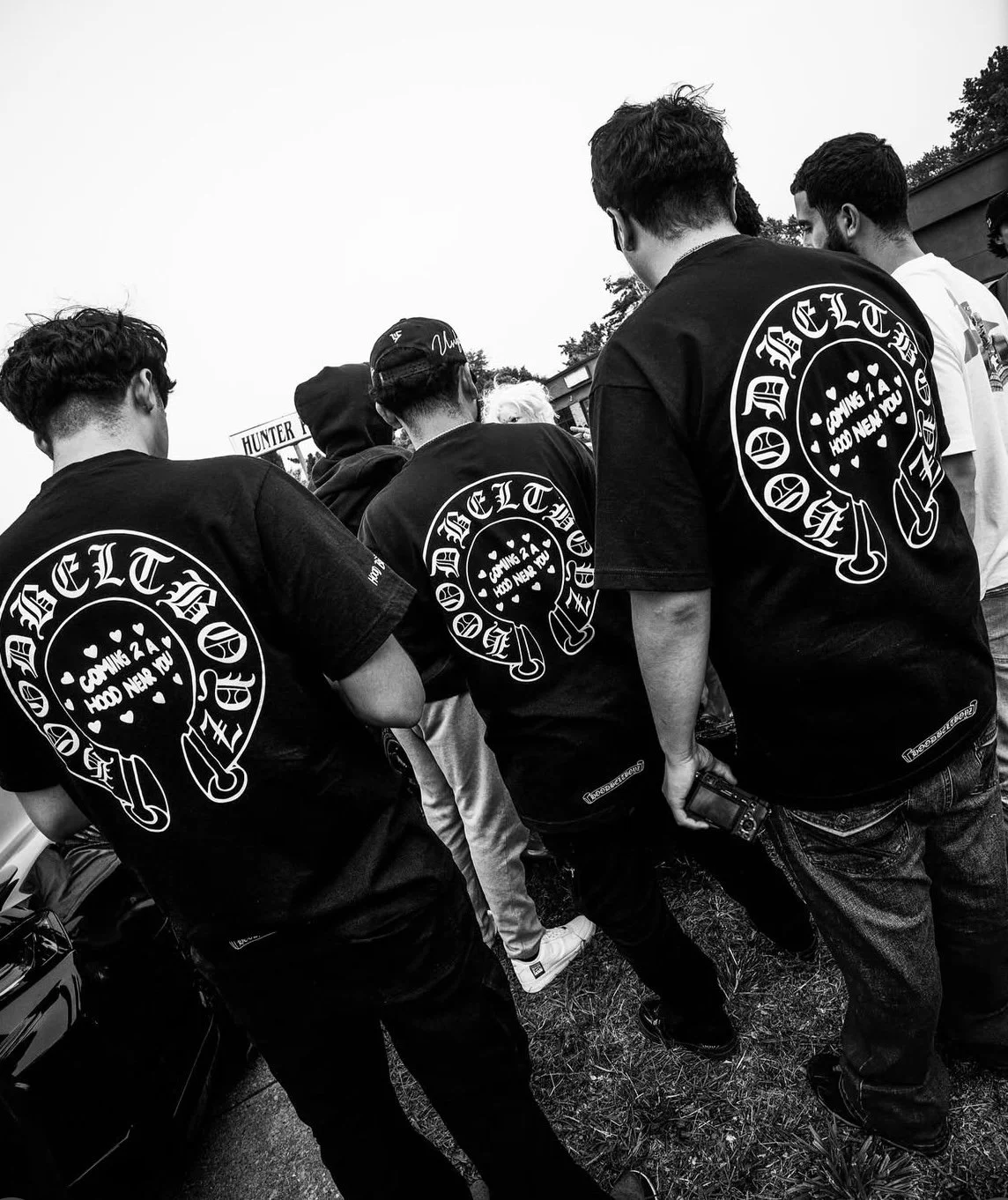
Puff height
Artwork openness, additive ratio, deposit, and heat determine expansion. Very fine type and tight counters can lose definition.
Specialty ink printing in Chicago
Puff, metallic, glow, and high-impact ink effects are not add-ons at the end of a job. Each changes the artwork, screen, deposit, print order, flash, and cure. We design the production plan around the effect from the start.
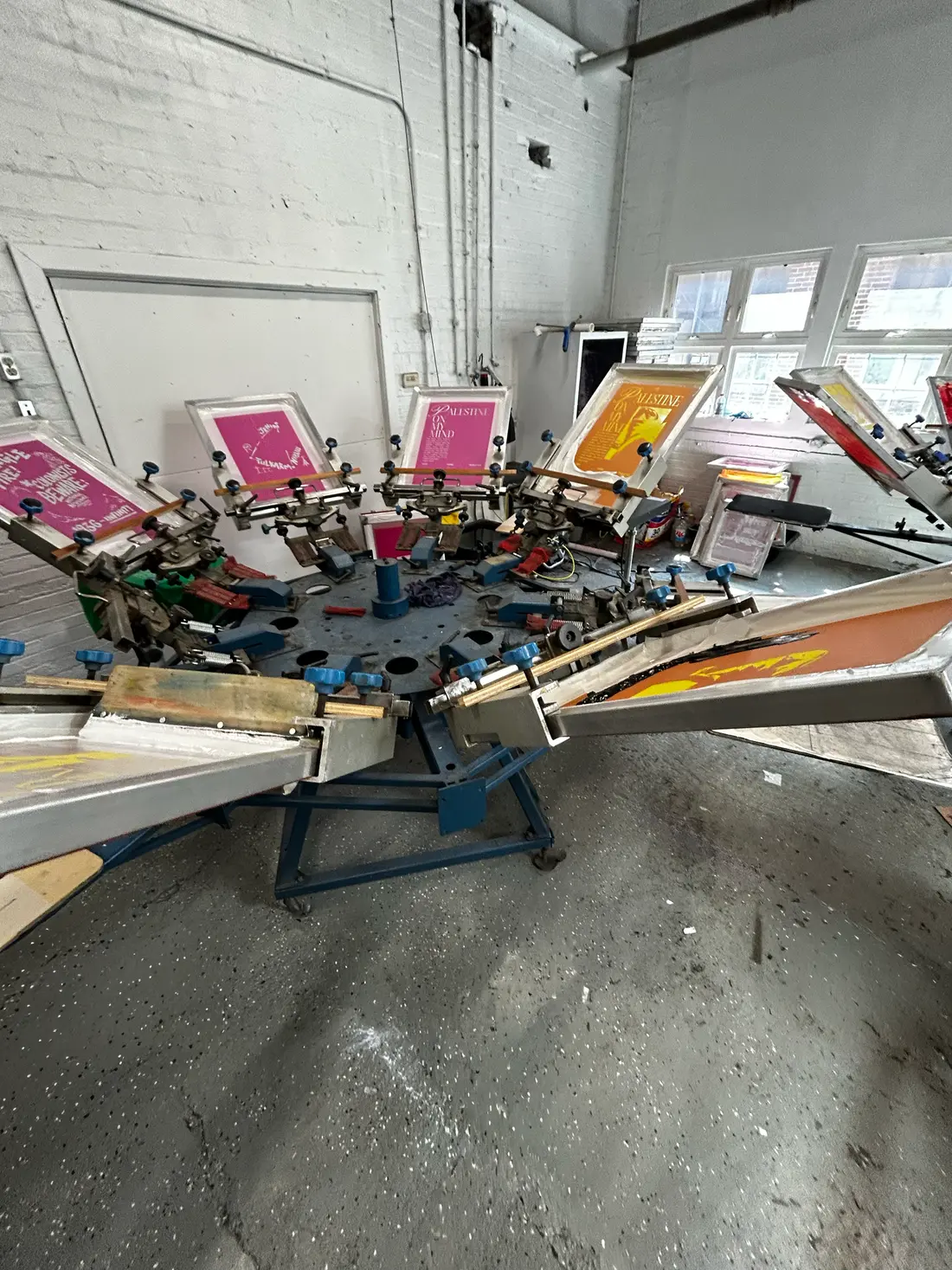 CAOS CREATES / CHICAGO
Engineered effects
Specialty ink changes more than appearance. Puff expands under heat, metallic particles need enough screen opening and deposit to show, and glow performance depends on coverage and exposure to light. Fine detail that works in a standard spot color may close up, spread, or lose impact in an effect ink.
We review the garment surface, artwork scale, line weight, underbase, color sequence, and hand-feel target before recommending an effect. A controlled test print confirms height, opacity, texture, registration, and cure before the run moves forward.
 ACTUAL CAOS WORK
From our shop
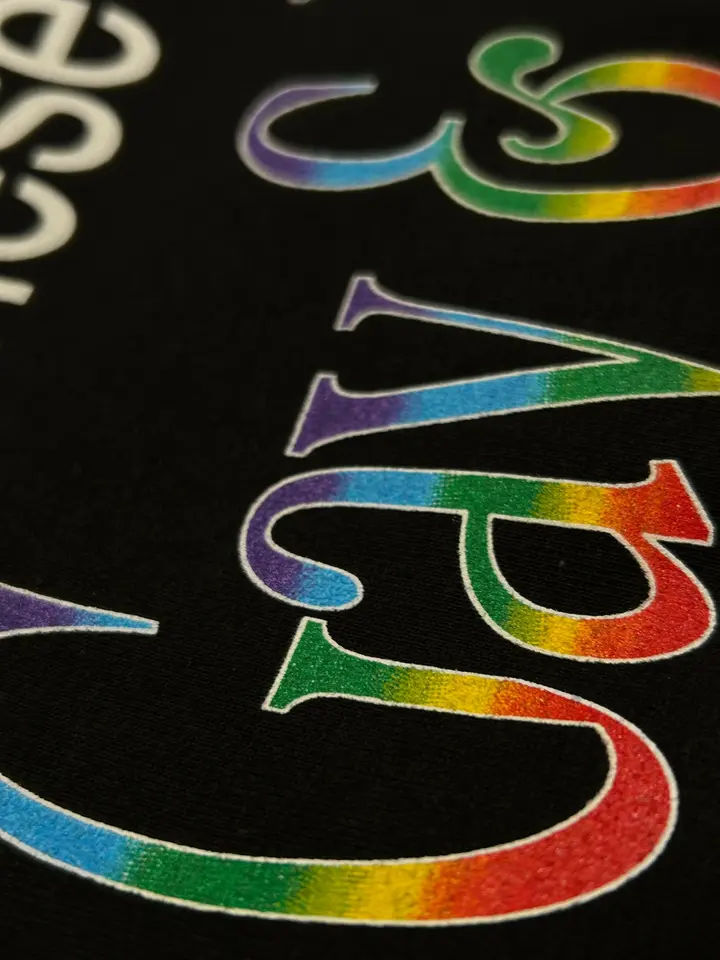
Close-up photography shows how bright color, garment texture, edge quality, and coverage meet in the finished piece.
View the production piece Make Something Like ThisInside the work
We identify whether the priority is raised texture, reflective shimmer, low-light glow, opacity, or a combination of standard and effect inks.
Line weight, negative space, trapping, and separations are adjusted so expansion or heavy deposit does not swallow the design.
Fabric, dye, texture, stretch, and heat sensitivity are checked against the selected specialty system.
Mesh, stencil thickness, squeegee, underbase, and print sequence are selected to control deposit and edge quality.
A strike-off confirms placement, color, texture, opacity, expansion, flash behavior, and final cure.
The run is monitored for consistent deposit and cure, then checked before finishing or packing.
Expert production choices
The best effect is usually placed where it can read clearly rather than forced across every detail.
Artwork openness, additive ratio, deposit, and heat determine expansion. Very fine type and tight counters can lose definition.
Metallic particles need a screen and deposit that let them pass while preserving usable detail and an even surface.
Glow intensity depends on pigment load, film thickness, base color, and how much light the print absorbs before darkness.
Dark garments may need a controlled base for brightness, but excess layers can make an effect feel heavy.
Smooth cotton, fleece, blends, and textured fabrics hold deposits differently and can change edge sharpness.
The final effect must be fully cured and cared for correctly; texture and special pigments make process discipline especially important.
Artwork guide
Send editable source art whenever possible so we can create clean effect and support layers.
Where it shines
Before production
Every design, garment, and deadline changes the best production route. We'll review the details before we quote.
Puff expands as it cures, so very fine lines and tight negative spaces can close up. Bold, open artwork usually produces a cleaner raised result.
It can have a more noticeable hand than a standard ink because the visual effect depends on metallic particles and sufficient deposit.
Glow is charged by light and reads best in darkness. Brightness and duration vary with pigment, deposit, base color, and charging conditions.
Not automatically. Fabric texture, dye, stretch, and heat tolerance affect the result, so we confirm compatibility before production.
A mockup communicates placement and intent, but physical texture, reflectivity, and glow cannot be represented perfectly on screen. A test print is the reliable reference.
Yes. The separations and print sequence must be planned together so the base colors support the effect without creating unnecessary thickness.
Built for your project
Send the artwork, quantity, garment type, print locations, and deadline. We'll recommend the production plan.
Start your project DESIGN / MAKE / DELIVER